Uninspired students, dull textbooks, healthcare routines that feel like chores – the struggle for sustained engagement in learning and wellness is a familiar one. This isn’t just a student problem; it’s a critical challenge for adult learning providers like higher education today. But what if the answer lies in play?
Enter gamification: the strategic application of game mechanics – like challenge, reward, social interaction, and progress – to make non-game contexts more absorbing and effective. It’s far more than just points and badges; it’s about leveraging core human motivators. While explored in many fields, gamification is proving truly transformative in education and healthcare (Shurui et al, 2020, Sailer & Homner, 2020).
In this episode of The Educated Guess, we’ll unpack the theoretical underpinnings and practical applications of gamification across these vital sectors. We’ll look closely at how I’ve designed and implemented games to boost student motivation and retention, and how healthcare providers are using game mechanics to empower patients and improve treatment adherence. Stick around as we explore the research, compelling case studies, and the exciting future of integrating play into the serious business of learning and healing.

Image source: Generate by Gemini
What is gamification?
For hundreds of years, games have played a significant role in human culture and society by encouraging involvement and motivation (Krath et al, 2021). Gamification builds upon this, applying game design elements (points, badges, achieving levels, leaderboards, challenges) in non-game contexts like education and healthcare (Rutledge et al, 2018). The aim is clear; to increase motivation, improve engagement and enhance outcomes from academic achievement and learning experiences to patient empowerment and treatment adherence (Bedwell et al, 2012, Krishnamoorthy et al, 2025 ).
Academically, gamification aligns strongly with the theories of intrinsic motivation, self-determination theory, constructivist approaches and gamified learning theory, emphasizing active participation, learner autonomy and competence development (Ryan & Deci, 2000, Rohman & Fauziati, 2021, Li, Ma & Shi, 2023).
Importantly, research shows that the effectiveness lies not just in the elements themselves, but in the thoughtful design and implementation of gamified interventions (Nylen-Eriksen et al, 2025, Krath et al, 2021). Furthermore, effective design requires careful consideration of diverse learning styles and the principles of equality and inclusion to ensure that these approaches create equitable and accessible experiences for all students. While this might sound like a novel approach, extensive research spanning computer science, psychology, game studies and pedagogy, alone with supporting academic programs and conferences (Nacke & Deterding, 2017, Landers et al, 2018), increasingly validates gamification as a powerful and legitimate tool.
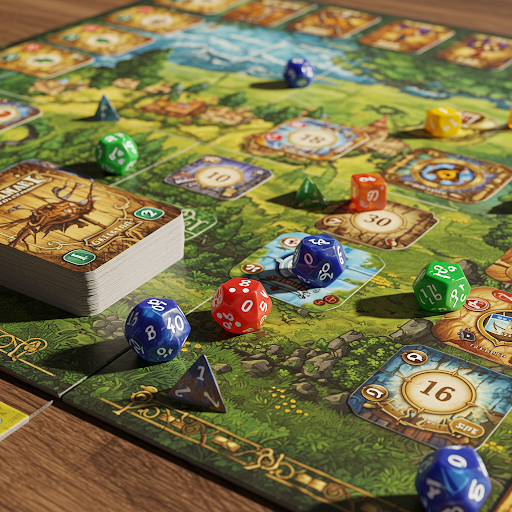
Image source: Generate by Gemini
To properly apply (and study) these methods, it’s crucial to distinguish gamification from related, yet distinct, approaches involving games in these contexts (Krath et al, 2021):
- Gamification: As discussed, this involves the application of game design elements to non-game contexts to influence behaviour and engagement. Examples include adding points to a course management system, using Kahoot or using challenge badges in a health app.
- Serious Games: These are full, self contained games explicitly designed with a primary purpose other than pure entertainment. This purpose could be education, training, health, simulation or social change. Examples include medical simulation games (often delivered in virtual reality (VR) or training simulations).
- Game-Based Learning (GBL): This is a specific type of Serious Game used as a medium to teach specific content, skills or concepts. Learning happens through playing the game and engaging with its mechanics, narrative and challenges (e.g. escape rooms ).
The key distinction is that gamification adds game elements to existing activities, whereas Serious Games and GBL involve engaging with a complete game experience designed for a serious purpose.
Current Use of Gamification in Healthcare & Education
To navigate the landscape of the digital age effectively, the NHS and its dedicated professionals must embrace digital transformation and cultivate robust digital literacy. Technology is key to unlocking enhanced patient engagement and acquiring valuable data – from tracking wellness progress to monitoring adherence to preventative care plans.
The widespread adoption of apps, for instance, is profoundly changing the patient experience, providing tools for self-monitoring, direct feedback mechanisms, and unique channels for communicating with specialist teams. Leveraging principles like gamification and integrating with wearable devices, these apps can create engaging experiences that motivate users towards positive health behaviours, automatically capturing valuable personal data like activity levels and vital signs. Furthermore, immersive technologies such as Virtual and Augmented Reality (VR & AR) have played a role in patient care and professional training for the past decade. With the possibility of including AI to further develop and improve the user experience, this offers new digital avenues for a myriad of patient care initiatives including mental health, pain management and rehabilitation.
This digital evolution creates a mutually beneficial dynamic: patients are empowered and better connected, while the NHS gains efficiencies by reducing administrative burdens on staff and opens up exciting new frontiers for research and service improvement. Prioritising digital literacy is essential to realising the full potential of these advancements as well as ensuring data privacy and security are upheld with GDPR guidelines.
Best Practices: Leveraging Gamification for Engagement
Building on the understanding that technology, including apps and digital platforms can significantly enhance engagement in healthcare, a key principle emerging in both patient care and professional development is the effective use of gamification.
For healthcare education and training, applying gamification isn’t simply about making things “fun”; it’s a strategic approach to improving learning outcomes, skill retention, and participation in continuous professional development required in a digitally transforming NHS (Busel & Polupan, 2022, Kachni, 2024)
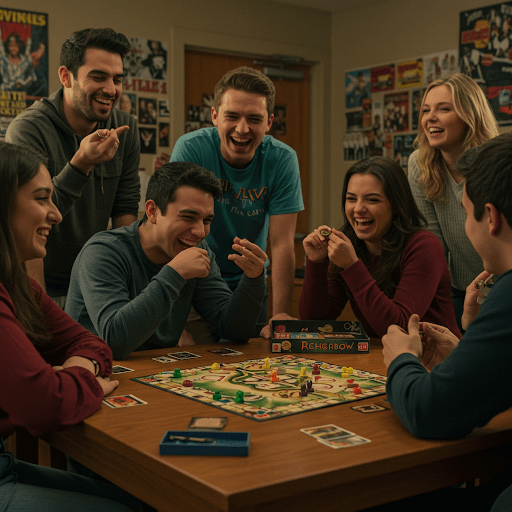
Image Source: Generated by Gemini
Informed by my understanding of educational theory, simulation practice and honed through practical experience in designing and making games, the successful application of game-based approaches in this context – spanning gamification, serious games and game-based learning- is guided by an adherence to key design and implementation best practices (Hamari et al, 2014, Rutledge et al, 2018, Sailer & Homner, 2020). These include:
- Aligning Mechanics with Learning Objectives
Gamified elements (like points, badges, levels, challenges) must directly support specific educational goals or learning objectives (Sailer & Homner, 2020).Tying rewards or progress to mastering a concept or successfully completing a relevant task ensures the focus remains on learning, requiring clear, upfront definition of what constitutes success or mastery (Krath et al, 2021, Landers, 2014).
- Define, Monitor & Evaluate Success
It is critical to clearly define learning objectives and what constitutes learner success before implementing gamification (Kirkpatrick & Kirkpatrick, 2006). Design must then include mechanisms to monitor learner progress and engagement data, and evaluate the overall effectiveness of the gamified intervention against the defined outcomes.
- Know Your Learners
Tailor the gamification design to the specific motivations, skill levels and preferences of your audience (professionals, students, children), respecting their context (Rutledge et al, 2018).
- Ensuring Psychological Safety (Critical)
Preventing anxiety and fostering a safe learning environment is paramount (Newman et al, 2017). Design gamification so learners feel comfortable trying and failing without fear, e.g. by making competition optional, favouring team challenges, and framing mistakes as learning opportunities (Kim et al, 2020).
- Fostering Collaboration and Healthy Competition
Actively design for positive social dynamics in gamification. Include mechanics that encourage both collaboration (e.g., team challenges) and healthy, well-structured competition to boost engagement and build a sense of community among learners (Moczulska et al, 2024).
- Designing Engaging, Achievable Activities With Feedback Loops
Focus on designing core learning activities or challenges that are both engaging (using mechanics) and appropriately achievable (right challenge level) (Laine & Rindberg, 2020). A compelling story and appealing visuals can significantly enhance user experience (Sailer et al, 2017). Crucially, build in effective feedback loops that immediately guide learners towards correct understanding and mastery in both digital and face-to-face formats.
- Providing Clear, Actionable Feedback
While game mechanics provide immediate feedback, its effectiveness in education, particularly asynchronously, hinges on clarity and actionability (Li, Ma & Shi, 2023). Learners need explicit confirmation, clear explanations for errors, and understanding of consequences or next steps. A useful design check is asking: How will they know they got it right, and what happens next?
- Promote Voluntary Engagement
Offer opportunities for learners to opt into higher levels of competition of engagement where appropriate, appealing to different motivational preferences (Nicholson, 2015).
- Integrating Seamlessly with Content
Ensure gamified elements enhance, rather than distract from, the core learning material, feeling like a natural part of the educational journey (Kaliban et al, 2023).
- Highlight Progress & Achievement
Clearly show learners their progress through the material or towards mastery, celebrating achievements to maintain motivation (Li, Ma & Shi, 2023).
- Ensure Accessibility and Inclusion
Design gamified experiences to be accessible to all learners, accounting for diverse digital proficiencies, abilities, and learning styles (Zainuddin, et al, 2020).
Putting Principles into Practice: Results from My Educational Practice
The compelling potential of game-based approaches to transform engagement and learning, as highlighted by these best practices, motivated me to explore their application directly to my practices. My educational practice has therefore become a space for designing and implementing game-based activities aimed at key goals, which vary from session to session.
I designed an educational game based on a mix of well known board games to teach cardiology. Learners played in teams, moving around a board and answering trivia questions across various categories related to cardiology e.g. drugs used, anatomy etc. Correct answers allowed them to collect tokens which allowed them to progress. Incident cards provided an element of chance, creating situations that relate to clinical practice and possibly affected their progression around the board. Winners were the first to collect all their tokens and answering a case study successfully. Engagement levels were greatly improved compared to other classroom activities and student feedback forms also suggested they found this game the most enjoyable. For this specific game, the key educational goals were knowledge recall and encouraging understanding of basic practice for exams.
In terms of outcome and evaluation, engagement levels were observed to be greatly improved compared to other classroom activities. Student feedback forms also consistently indicated that they found this game highly enjoyable and a valuable learning experience. Subsequently, knowledge of cardiology among participants was demonstrably improved.
As a face-to-face implementation, this game successfully served as proof of concept. It was simple to design and implement with only stationary costs, validating the potential of using adapted board game mechanics for effective education.
Beyond adapting trivia and board game mechanics, I’ve explored game formats aimed at developing different skill sets. To address learning objectives focused more on communication and visual understanding, I implemented a game based on drawing and guessing mechanics. In this context, content that was otherwise heavily-word based, necessitated a contrasting, more visually-oriented approach. Learners were asked to draw a card from a deck at random and asked to draw the anatomical structures, tests or tools associated with abdominal assessment. This game was specifically aimed to develop visual association, which I had seen some students struggle with and develop an ability to explain concepts non-verbally as well as rapid recall. Learners played in teams which gave plenty of practice and a sense of collaboration when results were compared with the other team. Success in this instance was measured by observing teamwork and engagement. Often producing a high energy, lots of laughter and fun in a low-stakes way, this game often provides some comic relief to an otherwise intense study day.
These distinct examples, from the knowledge focused cardiology game to the communication driven abdominal assessment game, demonstrate the versatility and impact of applying game-based learning principles in practice. Across both implementations, consistently observed benefits included significantly heightened learner engagement and overwhelmingly positive feedback, confirming that learning can be both effective and enjoyable. This experience underscores the importance of tailoring mechanics to specific, varied learning objectives, understanding the unique needs of the audience and consciously designing for psychological safety and positive social interaction. When well-designed and successfully implemented, these games serve as powerful tools for achieving educational goals and enriching the learning experience within healthcare training.
Challenges & Considerations
Despite the clear benefits and positive outcomes observed in practice, implementing game-based learning effectively presents notable challenges. Educators must navigate complexities related to diverse learner engagement, balancing fun with academic rigour, and ensuring accessibility for all.
- Not all learners respond equally: not all learners respond equally and may not enjoy or engage with competition and games. Providing a diverse range of learning styles and activities to support learning is a key consideration.
- Balancing fun with educational rigour: A critical challenge and one that comes from using gamification principles to achieve learning objectives and not the other way round. Game elements should enhance the learning, not detract from it.
- Ensuring inclusivity and accessibility: This will come from understanding best practices and identifying and addressing potential barriers to participation. This could be learning styles but also computer and internet access.
Future Directions
Emerging trends such as AI and personalised adaptive gamification offer huge promise in creating gamification to meet diverse needs and individual progress. Simultaneously, the increasing accessibility of electronic formats and advancements in immersive technologies such as VR/AR are enabling wider reach and the creation of highly realistic simulation based training. Collectively, these developments point towards significant opportunities for broader adoption across healthcare professional development and continuing education, offering dynamic and accessible new ways to build essential skills within the NHS and beyond. Exploring how to integrate and design these future capabilities into educational practice, is an exciting prospect.
Gamification offers a powerful, evidence-backed strategy to revitalise engagement and enhance outcomes in both education and healthcare. Grounded in motivational theories and applicable across diverse digital and physical contexts, it presents a significant potential for improving learning experiences and patient care. For educators and healthcare professionals, exploring and thoughtfully integrating game-based approaches is a compelling opportunity to unlock new levels of motivation, effectiveness and accessibility in shaping the future of learning and healing. That’s my educated guess on where gamification is heading based on the trends we’ve discussed. Do you agree with this or see things differently? If you have any ideas for games or would like to share your successes with gamification, please share below, it helps us learn and grow!
References
Bedwell, W. L., Pavlas, D., Heyne, K., Lazzara, E. H., & Salas, E. (2012). Toward a Taxonomy Linking Game Attributes to Learning: An Empirical Study. Simulation & Gaming, 43(6), 729-760. https://doi.org/10.1177/1046878112439444
Busel, S.V. and Polupan, K. (2022) The nature and features of the implementation of gamification as a systematic and specific game practice into the educational sphere, Samarskij naučnyj vestnik, 11(4), pp. 239–246, [online] Available at: https://snv63.ru/2309-4370/article/download/321479/112995
Hamari, J., Koivisto, J., & Sarsa, H. (2014). Does gamification work?—A review of empirical studies in ten application areas. International Journal of Human–Computer Studies, 72(4), 425–438.
Kachni, Z. (2024) Gamified Success, Advances in media, entertainment and the arts (AMEA) book series, IGI Global, pp. 157-176.
Kabilan, M. K., Annamalai, N., & Chuah, K. M. (2023). Practices, purposes and challenges in integrating gamification using technology: A mixed-methods study on university academics. Education and information technologies, 1–33. Advance online publication. https://doi.org/10.1007/s10639-023-11723-7
Kim, S., Lee, H., & Connerton, T. P. (2020). How Psychological Safety Affects Team Performance: Mediating Role of Efficacy and Learning Behavior. Frontiers in psychology, 11, 1581. https://doi.org/10.3389/fpsyg.2020.01581
Kirkpatrick, D. L., & Kirkpatrick, J. D. (2006). Evaluating training programs: The four levels. Berrett-Koehler Publishers.
Krath, J., Schurmann, L., von Korflesch, H.F.O. (2021) Revealing the theoretical basis of gamification: A systematic review and analysis of theory in research on gamification, serious games and game-based learning, Computers in Human Behavior, 125, 106963, https://doi.org/10.1016/j.chb.2021.106963..
Krishnamoorthy, Y., Govindan, D., Karunakaran, M., Parveen, M., Poul, A. J., Manohar, A., & Rajendran, G. (2025). Gamification-Based Teaching Methods for Pandemic and Outbreak Investigation Training Among Healthcare Professionals and Students: A Systematic Review. Simulation & Gaming, 0(0). https://doi.org/10.1177/10468781251338382
Laine, T. & Lindberg, R. (2020) Designing Engaging Games for Education: A Systematic Literature Review on Game Motivators and Design Principles. IEEE Transactions on Learning Technologies. PP (99): 1-1. DOI:10.1109/TLT.2020.3018503
Landers, R. N., Auer, E. M., Collmus, A. B., & Armstrong, M. B. (2018). Gamification Science, Its History and Future: Definitions and a Research Agenda. Simulation & Gaming, 49(3), 315-337. https://doi.org/10.1177/1046878118774385
Landers, R. N. (2014). Developing a theory of gamified learning: Linking game design principles to instructional design. Simulation & Gaming, 45(6), 752–768.
Li, M., Ma, S., & Shi, Y. (2023). Examining the effectiveness of gamification as a tool promoting teaching and learning in educational settings: a meta-analysis. Frontiers in psychology, 14, 1253549. https://doi.org/10.3389/fpsyg.2023.1253549
Moczulska, M., Glabiszewski, W. & Grego-Planer, D. The impact of employee collaboration and competition on team work engagement. Curr Psychol 43, 19032–19044 (2024). https://doi.org/10.1007/s12144-024-05702-5
Nacke, L.E. & Deterding, S. (2017) The maturing of gamification research, Computers in Human Behavior, 71, pp. 45-454. https://doi.org/10.1016/j.chb.2016.11.062.
Newman, A., Donohue, R., Eva, N. (2017) Psychological safety: A systematic review of the literature. Human Resource Management Review, 27,(3), pp 521-535. https://doi.org/10.1016/j.hrmr.2017.01.001.
Nicholson, S. (2015) A RECIPE for Meaningful Gamification. In Wood, L. & Reiners, T., eds. Gamification in Education and Business, New York: Springer. 1-20.
Nylén-Eriksen, M., Stojiljkovic, M., Lillekroken, D., Lindeflaten, K., Hessevaagbakke, E., Flølo, T. N., … & Bjørnnes, A. K. (2025). Game-thinking; utilizing serious games and gamification in nursing education – a systematic review and meta-analysis. BMC Medical Education, 25(1), 1-15.
Rohman, I. & Fauziati, E. (2021). Gamification of Learning in the Perspective of Constructivism Philosophy Lev Vygotsky. Budapest International Research and Critics Institute-Journal (BIRCI-Journal), 1 4(2), 4466-4473.
Rutledge, C., Walsh, C.M., Swinger, N., et al. (2018) Gamification in Action: Theoretical and Practical Considerations for Medical Educators. Acad Med. 93(7):1014-1020. doi:10.1097/ACM.0000000000002183
Ryan, R. M., & Deci, E. L. (2000). Self-determination theory and the facilitation of intrinsic motivation, social development, and well-being. American Psychologist, 55(1), 68–78.
Sailer, M. & Homner, L. (2020) The Gamification of Learning: A Meta-Analysis. Educational Psychology Review. 32(1); 77-112. DOI:10.1007/s10648-019-09498-w
Sailer, M., Hense, J.U., Mayr, S.K., Mandl, H. (2017) How gamification motivates: An experimental study of the effects of specific game design elements on psychological need satisfaction. Computers in Human Behavior. 69, pp 371-380.
Shurui, B., Hew, K.F., Huang, B. (2020) Does gamification improve student learning outcome? Evidence from a meta-analysis and synthesis of qualitative data in educational contexts. Educational Research Review. 30, 100322. https://doi.org/10.1016/j.edurev.2020.100322.
Zainuddin, Z., Kai Wah Chu, S., Shujahat, M., Perera, C.J. (2020) The impact of gamification on learning and instruction: A systematic review of empirical evidence. Educational Research Review. Volume 30, https://doi.org/10.1016/j.edurev.2020.100326.
Disclaimer: All views and opinions expressed in this post are solely my own and do not represent any organisation, including my employer. The educational practices and experiences discussed reflect my professional career to date, not exclusively my current role.
 The Educated Guess
Leave a comment