By Sophie May. Published 6th May 2025
American football (AF) holds a special place in our family. My two teenage sons have fallen in love with AF and our year revolves around travelling to training camps and games. As anyone involved in this contact sport knows, injuries are an unfortunate reality. This past weekend, watching my youngest son play with the U16s at a tournament on the South Coast, the physical toll was evident with a worrying number of head injuries on both sides. Concussions, or mild head injuries, are a particular concern because they’re notoriously difficult to detect reliably on the sideline or even in hospital, often relying on a mix of observations that can present differently from player to player.
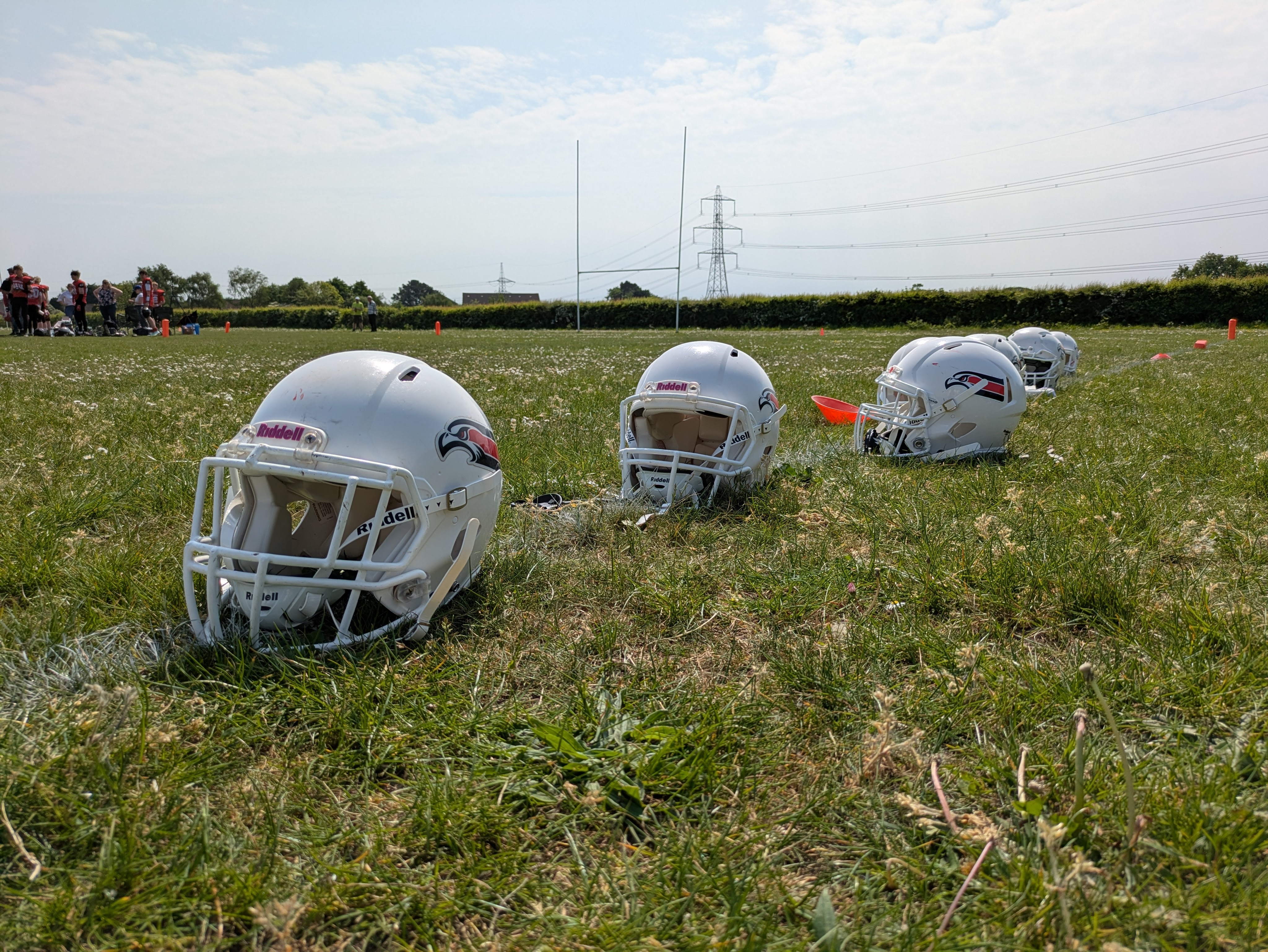
South Coast American Football. Image source: Sophie May
Why Concussions Are Critical In Sports and Healthcare
This difficulty in detection is a major concern because, as the epidemiological data shows, our experience this weekend was far from an isolated incident. Head injuries, particularly concussions (mild traumatic brain injury or mTBI), are a significant issue across AF at various levels (BAFA, 2024).
The National Football League (NFL) reported that 182 head injuries occurred in all 32 teams across the 2024 preseason and season sessions; its lowest number in history since tracking began in 2015 (NFL, 2024). In American collegiate football, concussion rates range from 0.37 to 0.74 per 1,000 athlete exposures, with this number considered to be greatly underreported (Baugh et al, 2019).
Although AF is less popular here than in the United States, it is growing, with British Universities and Colleges Sport (BUCS) teams reporting that there are over 4,000 UK students in 14 leagues who compete every Sunday (BUCS, 2024). There is no epidemiological data on how many children play AF in the UK but it is also thought to be growing each year. To contextualise the potential injury burden within a more established sport in the UK, we can examine data from men’s youth rugby, where head injury rates have reached 30.6 per 1000 player match hours (YRISP, 2022). Comparing these figures, while noting the different metrics (athlete exposures vs. player match hours), underscores the substantial head injury risk inherent in contact sports popular with young athletes.

Image source: Advanced Vestibular Clinic, Austraila.
This substantial risk is compounded by the challenges in acute diagnosis. The short-term effects of concussions on cognitive, physical, and emotional issues can range from minor to significant, lasting days to months depending on a variety of factors (Agarwal et al, 2024). Furthermore, a growing body of evidence indicates an increased risk of Chronic Traumatic Encephalopathy (CTE) with repeated head impacts, including both symptomatic concussions and subconcussive trauma (McKee et al, 2023, Nowinski et al, 2022).
This suggests a strong link to a cumulative effect on neurophysiology. The difficulty in accurately and consistently detecting these injuries, particularly subtle or subconcussive impacts, is therefore a critical concern, as continued exposure to head trauma can potentially exacerbate both acute recovery and long-term cumulative risk.
Why Are Concussions So Difficult to Diagnose? Challenges In Detection & Diagnosis
So why are concussions so difficult to diagnose? They often lack visible signs and symptoms; unlike a fractured bone, a concussion doesn’t always have obvious external signs. Signs of a concussion can also be subjective and often need appropriately trained medical personnel at the sideline to recognise potential and subtle nuanced signs, which can also overlap with other injuries such as neck pain, fatigue or dehydration.
Symptoms can also be delayed, which is understandable given the natural evolution of these injuries. Duhaime et al (2012) found that 50% of collegiate AF athletes who sustained a diagnosed concussion did not experience an “immediate or near immediate” onset of symptoms.
Medical personnel are able to use tools developed for sideline use, such as the Standardized Assessment of Concussion Tool (SCAT) 6 (Echemendia et al, 2023), which incorporate balance, memory, orientation, and cognition tests but are subjective in their approach and rely heavily on self-reported symptoms, troublesome for teenagers who just want to play. At present, these tests are used as adjuncts to aid decision making with an overriding premise that any concerns of a “hard hit” should prompt withdrawal from play for a head injury assessment (DCMS, 2023). England Rugby also endorse this with “if in doubt, sit out” messages and their “headcase” e-learning.
There is no specific diagnostic test or biomarker for concussions. Neuroimaging tests such as MRI and CT scans are used to rule out more severe brain injuries but are not sensitive enough to detect microscopic brain damage found in concussions. A multimodal approach from clinicians, coaches, parents, and players is required to safely diagnose and monitor concussive events, to avoid under- and overdiagnosis, to ensure a safe return to play, and to ensure the long-term health of athletes in contact sports (Silverberg et al, 2020).
Unfortunately, the common belief that wearing helmets prevents concussions is incorrect (Zhang et al, 2024, Daneshvar, 2011). There are helmets that contain liquid shock absorbers whose developers suggest they cut the impact by a third compared to existing models, however, these are new, expensive and therefore not widely available in the UK. Existing models distribute impact forces which helps reduce severity of impacts that reduce skull fractures, however they are by no means foolproof. No helmet can stop the brain moving within the skull; which is the primary mechanism for causing concussions (Ferry & DeCastro, 2023).
A properly fitted helmet is essential for maximum risk reduction (Greenhill et al, 2016), though soft shell covers worn by rugby players have been shown to be ineffective in preventing mTBI (Knight et al, 2021). The g-forces (g’s) involved in tackling, the riskiest part of both rugby and AF, for causing concussions, can be huge. Some players, such as Louis Rees-Zammit, have been clocked running at 24 mph over short bursts, resulting in linear accelerations measuring 70-120g in adult tackles, representing the significant biomechanical forces at play (Parmley et al, 2023).
Data suggests a range of 90-100g for diagnosed concussions in adults, with children showing 30-90g. Notably, there is no single threshold for immediate removal from play or the diagnosis of a concussion, and there is a lack of clear description for what a high-impact event without concussion would look like with this data, indicating significant variability in what is described as a “high g” impact.
Furthermore, g-impacts only detect linear acceleration forces, while rotational acceleration has been identified as being at least as important as linear forces in determining concussions. Although there are helmets with advanced technologies designed to reduce linear and rotational forces, they are costly and difficult to find, particularly in the UK. Basic helmets commonly used by youth teams cost upwards of £500 with the most expensive costing nearly £1,000 – not achievable for most grass roots schemes or families struggling to pay bills.
For perspective, here are g force readings associated with common activities:
- a sneeze has roughly 2.9g,
- sitting down quickly has roughly 10g,
- turning a vehicle is roughly 1g,
- a hearty greeting slap on the upper back 4.1g,
- a formula one car maximum under heavy braking 6.3g,
- jet fighter pilot during ejection seat activation 15 – 25g.
Source: Wikipedia

An accelerometer fitted to an American footballer’s helmet in Florida. Image source: Jacksonville.com
How Can AI Help Prevent Concussions?
So how can Artificial Intelligence (AI) help? Firstly, let’s look at prevention. AI algorithms can analyse vast datasets of player data (e.g., biomechanics, training loads, movement patterns, medical history, and even sleep patterns) to identify individual risk factors that may predispose athletes to concussion.
In 2024, the NFL teamed up with Amazon Web Services (AWS) to revolutionise player health and safety by creating the Digital Athlete (NFL, 2025). Digital Athlete is an injury prediction tool that uses data and video from training, practice, and games and AI to run millions of simulations with variables including weather, equipment, and play type to tell teams when players are at the highest risk of injury. Clubs can use this information to develop individualised training, prevention, and recovery plans for players and even has been used to inform rule changes such as the Dynamic Kickoff and develop innovative coaching methods (NFL 2025).
Imagine you were playing Madden NFL and you had an assistant coach whisper to you, “I don’t think you should run that play.” This is what AI can do….Game changer!
Beyond large-scale predictive tools like Digital Athlete, AI-powered video analysis can also assess tackling or other high-risk techniques in realtime or post event, providing coaches and players with how to improve form and reduce dangerous contact.
Wearable sensors and GPS systems can collect player data that can be analysed by AI to assess periods of increased fatigue or overtraining, which might make players more susceptible to injury, including concussion. Sensors in tackle bags or training equipment can also advise on appropriate tackling techniques. The ultimate goal is to reduce the frequency and severity of concussive impacts however, its application to the cash strapped youth teams of British American Football (BAF) poses a significant limitation.
How Can AI Help Diagnose and Manage Concussions?
Secondly, we can use AI to look at detection and diagnosis. AI could provide us with a tool to provide an enhanced sideline assessment. Wearable sensors could provide real time data on the impact force and head movement, which could be used alongside current sideline assessments like SCAT6 to enable a more thorough evaluation. AI could also assess player behaviour immediately after a hit, providing a thorough and more objective evaluation and an evidence base to draw clinical conclusions on.
While these sideline enhancements hold promise, significant, practical challenges exist. Clinicians tend to assess head impacts by discussing the incident with patients or witnesses or, if they are lucky, watching it back on film. Understanding how to use this data to inform their clinical decisions is significant and will need to be widespread to include private medical staff used to support sidelines, healthcare volunteers, club medics, and ED/UTC staff who evaluate these patients. Wearable sensors and the technology to extract their data is also costly, particularly for clubs with >40 players. Film is often used to tape games rather than used for medical assessment which means a need to find extra money to fund this new tech.
Often in the UK, games are the only ones recording and if concussions occur in practice or training when film is not running, will limit this tech’s efficiency and accuracy. However, AI could be used to integrate different data streams to offer a more holistic sideline assessment, even if immediate implementation is difficult. In the near future, AI may more realistically be used to analyse datasets to identify potential biomarkers for concussion to develop more reliable tests, support MRI and CT scans to enhance their sensitivity and detect those subtle changes that could lead to earlier and more accurate diagnoses. AI could also adapt cognitive tests based on an individual’s baseline and performance, making them more sensitive to subtle changes post impact.
How Can AI Help Monitoring And Recovery Of Diagnosed Concussions?
Thirdly, is monitoring and recovery. Once a concussion has been diagnosed, there are several ways AI can help us. Athletes can use apps or platforms to report their symptoms on a regular basis. This is not only useful for assessing player recovery but aids in collecting data for research to identify patterns and trends that might not be obvious with traditional manual tracking. This appears to be particularly useful in the detection of new or worsening symptoms – prompting an early warning to get medical attention, or deviations from typical recovery trajectories.
AI can also use this data to offer tailored advice and strategies for managing specific symptoms based on the data and provide personalised advice on their recovery such as highlights or areas of concern. An example of this would be analysing an individual’s baseline data along with their recovery progress to tailor rehabilitation plans. This could include personalised cognitive exercises, vestibular and balance training and gradual return to activity protocols. It can also take into account any individual learning differences and languages, making this a much more effective and equitable way of enhancing recovery.
If enough athletes collect this kind of data, AI models could potentially even predict how an individual might respond to different treatment and rehabilitation plans, allowing clinicians to select and discuss with the patient the most effective strategies. This offers a time and cost effective treatment option that is individualised and patient centred – the goal of the NHS Constitution and NHS Long Term Plan (DHSC, 2021, NHS, 2019).
Ultimately, for the athlete, this enables them to return to health and play quicker. I’m sure my sons, like yours, would love that idea!
From a long term perspective, those identified and diagnosed with concussions can utilise AI to identify subtle long term neurological changes or risk factors for CTE and other factors that may not be detected through traditional statistical methods.
Navigating The Complexities of Applying AI to Concussion Care
Although the potential for AI is massive and incredibly exciting, there are significant challenges and considerations to implementing these technological advancements.
- Cost: I think this will be the most considerable barrier to implementing AI in the near future. As a new and rapidly evolving technology, the cameras, sensors and computer software all need to funded and bought. Maintenance and updates of them is also a factor to consider. With even basic AF equipment being expensive and only used for a short period of time (5-10 years), all funding in my experience is geared towards ensuring basic safety; technology like this is simply out of reach with a cost conscious economy. British American Football Association (BAFA); the governing body of AF here in the UK, does not receive funding like rugby and football do and so are just as limited to provide financial support.
- Availability: Wearable technology is currently designed only for adults, which is great for those who have adult teams. With youth teams players ranging from 13-19 years old, size and physiological parameters may be different and rapidly changing with growth spurts. Accelerometers and Rotational force sensors also require specialist embedding into helmets to avoid damage to the helmet or injury to the player. As AF in the UK is so niche, it is not likely at present that these new and exciting tools will be made available to this vulnerable cohort. Unlike the NFL who have attached their AI cameras to the stadiums they play in, BAFA teams at all levels rarely have this luxury. With 4G and grass pitches commonplace, there is little tangible structures to adhere cameras too to make this implementation as easy as in the NFL.
- Data Privacy & Security: Collection and analysis of sensitive data requires robust privacy and security measures that meet GDPR standards, particularly for junior players where parental consent is required. Coaching and medical teams also require training in the storage and use of this data as well as the technical skills to use it. Longitudinal data tracking is also a consideration and may require further detailed and informed consent as well as storage. Tools like this require thorough evaluation and monitoring with rigourous research to demonstrate its effectiveness, which takes time and financial backing to achieve.
- Use in Clinical Practice: Education of clinical staff to demonstrate the clinical utility and develop understanding to inform clinical decision making to effortlessly integrate these tools into clinical practice. With patient focused tools like those mentioned in monitoring and recovery section, they require patient engagement and regular, honest reporting of symptoms to be effective and successful. We also have to consider what happens if something goes wrong with the technology – who accepts responsibility for this? The clinician, the technology company or AI developers?
- Technical Skill & Public Perception: Being able to use the software is absolutely vital to success. Digital literacy is a key part of this for players, parents and coaches alike with 81% of adults in the UK having a foundational level of digital skill (ONS, 2019). Technical skill of clinicians will also be required. Public trust of AI also needs to be developed to ensure they understand the effectiveness, goals and needs of the AI with rapid development of AI being cited as a reason for anxiety amongst many. I understand there may be other reasons for such anxiety which can be addressed, but fear of change is a significant barrier to “winning hearts and minds”.
- Data Comparison: In addition to cost and availability of the technology, we also have to consider further practical factors. Wearable sensors need to record the same values to enable valid, robust and significant points to be drawn from the analysis. The difference between NFL and rugby data can be seen above and is an example of how different contact sports may make comparisons difficult if this is not considered in the design phase.
- Ethics: From an ethical standpoint, the implementation of AI in concussion management must prioritise the enhancement of player recovery and the promotion of long-term health. This necessitates a commitment to transparency and player agency, ensuring athletes understand how their data is being used and that those AI driven insights do not result in arbitrary decisions that unneccessarily prevent them from playing. Strong ethical frameworks, developed in consultation with athletes, coaches and medical professionals, are crucial to build trust and ensure that this technology empowers recovery rather than restricting opportunity unfairly.
- Bias: At present the data we have all revolves around male adult players. I understand why this has been trialled on them, but to make more valid datasets and to ensure AI does not discriminate against other demographics, it is essential to gather data from women’s leagues, youth leagues and across geographical locations to identify patterns needed to avoid biased data. Remember, AI itself is not biased, but may produce such decisions if data it is trained on contains bias. Clear metrics on what “fairness” looks like would also be useful to allow ongoing auditing and evaluation of its function, enabling easy identification of any biased decisions it might make.
I can see the introduction of the Digital Athlete in the NFL coincides with their lowest number of concussions in history. I cannot definitively tell whether this is due to the AI component or something else, but it raises the question as to whether we could implement this technology here with rugby and AF.
In conclusion, I would welcome the use of AI to help players like my sons, if it was implemented with careful consideration for the factors above. I would also welcome research into the technology and know that my sons would love to be a part of any research that could make them and their friends safer in the game they love. From a professional point of view, I would love to see objective tools that could help make my decision making less arbitrary as long as I can retain human oversight. Also any tools that could potentially reduce the need for ED visits would also be welcome. It is a fantastic idea and we are just beginning to scratch the surface!
Does anyone have any thoughts they would like to share?
References
Agarwal, N., Thakkar, R., Than, K. (2024) Concussion. American Association of Neurological Surgeons. Available at: https://www.aans.org/patients/conditions-treatments/concussion/
Baugh, C.M., Meehan III, W.P., Kroshus, E., McGuire, T.G., Hatfield, L.A. (2019) College Football Players Less Likely to Report Concussions and Other Injuries with Increased Injury Accumulation. Journal of Neurotrauma. 36(13);2065-2072. https://pmc.ncbi.nlm.nih.gov/articles/PMC6602107/#:~:text=Injury%20and%20reporting%20characteristics,four%20concussions%20to%20medical%20personnel.
British American Football Association (2024) Concussion Guidelines. Available at: https://rules.bafra.info/medical/concussion/Concussion%20Protocol%202024r0.pdf
BUCS (2024) American Football. Available at: https://www.bucs.org.uk/sports-page/american-football.html
Daneshvar, D.H., Baugh, C.M., Nowinski, C.J., McKee, A.C., Stern, R.A., Cantu, R.C. (2011) Helmets and Mouth Guards: The role of personal equipment in preventing sport-related concussions. Clin Sports Med. 30(1): 145-163.
Department of Culture, Media & Sport (2023) UK Concussion Guidelines for Grassroots Sport. Available at: https://www.gov.uk/government/news/landmark-concussion-guidance-for-grassroots-sport-published
Department of Health & Social Care (DHSC, 2021) The NHS Constitution. Available at: https://www.gov.uk/government/publications/the-nhs-constitution-for-england
Duhaime, A.C., Beckwith, J.G., Maerlander, A.C., McAllister, T.W., Crisco, J.J., Duma, S.M., Gunnar Brolinson, P., Rowson, S, Flashman, L.A., Chu, J.J., Greenwald, R.M. (2012) Spectrum of acute clinical characeteristics of diagnosed concussions in college athletes wearing instrumented helmets: clinical article. Journal of Neurosurgery. 117 (6):1092-9.
Echemendia, R.J., Brett, B.L., et al, (2023) Sport concussion assessment tool – 6 (SCAT6). Br J Sports Med. 57 (11: 622-631. doi: 10.1136/bjsports-2023-107036
Ferry, B. & DeCastro, A. (2023) Concussion. StatPearls. Available at: https://www.ncbi.nlm.nih.gov/books/NBK537017/
Greenhill, D.A., Navo, P., Zhao, H., Torg, J., Comstock, R.D., Boden, B.P. (2016) Inadequate Helmet Fit Increases Concussion Severity in American High School Football Players. Sports Health. 22:8(3): 238-243. doi: 10.1177/1941738116639027
Knight, J.M., Nguyen, J.V.K., Mitra, B., Willmott, C. (2021) Soft-shell headgear, concussion and injury prevention in youth team collision sports: a systematic review. BMJ Open; 11: e044320. doi: 10.1136/bmjopen-2020-044320.
McKee, A.C., Stein, T.D., Huber, B.R., Crary, J.F., Bieniek, K., Dickson, D., Alvarez, V.E., Cherry, J.D., Farrell, K., Butler, M., Uretsky, M., Abdolmohammadi, B., Alosco, M.L., Tripodis, Y., Mez, J., & Daneshvar, D.H., (2023) Chronic traumatic encephalopathy (CTE): criteria for neuropathological diagnosis and relationship to repetitive head injuries. 145, pp.371-394. Available at: https://link.springer.com/article/10.1007/s00401-023-02540-w
NFL (2025) Building a Digital Athlete: Using AI to rewrite the playbook on NFL player safety. Available at: https://www.nfl.com/playerhealthandsafety/equipment-and-innovation/aws-partnership/building-a-digital-athlete-using-ai-to-rewrite-the-playbook-on-nfl-player-safety
NHS (2019) The Long Term Plan. Available at: http://www.longtermplan.nhs.uk/publication/nhs-long-term-plan
Nowinski, C.J., Bureau, S.C., et al (2022) Applying the Bradford Hill Criteria for Causation to Repetitive Head Impacts and Chronic Traumatic Encephalopathy. Neurotrauma. 13. doi: https://doi.org/10.3389/fneur.2022.938163
ONS (2019) Exploring the UK’s digital divide. Available at: https://www.ons.gov.uk/peoplepopulationandcommunity
Parmley, J., Jones, B., Whitehead, S.R., Rennie, G., et al (2023) The speed and acceleration of the ball carrier and tackler into contact during front-on tackles in rugby league. Journal of Sports Sciences; 41(3):1-9.
Silverberg, N.D., Iaccarino, M.A. et al.(2020) Management of Concussion and Mild Traumatic Brain Injury. Archives of Physical Medicine and Rehabilitation. 101(2): 382-393. https://doi.org/10.1016/j.apmr.2019.10.179
Youth Rugby Injury Surveillance Project(2022) Youth Rugby Injury Surveillance Prevention Project. Available at: https://keepyourbootson.co.uk/wp-content/uploads/2022/03/CRISP-report-2021-22.pdf
Zhang, Y., Mitusi, M., Yoneyama, S., Aomura, S. (2024) Influence of Long-Term Use of American Football Helmets on Concussion Risk. Brain Sci. 14(6):537. doi: https://doi.org/10.3390/brainsci14060537
Disclaimer: All views and opinions expressed in this post are solely my own and do not represent any organisation, including my employer. The educational practices and experiences discussed reflect my professional career to date, not exclusively my current role.
 The Educated Guess
Leave a comment